Devpost
Participate in our public hackathons
Devpost for Teams
Access your company's private hackathons
Grow your developer ecosystem and promote your platform
Drive innovation, collaboration, and retention within your organization
By use case
Blog
Insights into hackathon planning and participation
Customer stories
Inspiration from peers and other industry leaders
Planning guides
Best practices for planning online and in-person hackathons
Webinars & events
Upcoming events and on-demand recordings
Help desk
Common questions and support documentation
The human microbiome is intertwined with human health. We trained a XGBoost model to classify disease state based on microbiome data and identified key 71 species which influence disease outcomes.
Gut Health! A multi class classification algorithm determining whether a person's gut is healthy or not. Using Tensorflow in Python, we are tackling Phyla's Challenge 2 and changing the world!
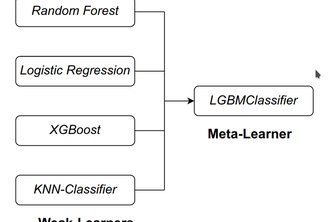
This ML-powered model uses several weak-learners and a meta-learner to make classifications.
Providing clear communication of pharmaceutical info for patients who are not English fluent, by creating a QR code for a patient’s prescription instructions in their chosen language.
Harnessing the power of machine learning to aid in the diagnosis of multiple myeloma
An auxiliary application to help make prescription drugs easier to manage and purchase.
Provide pharmaceutical researchers with the most up-to-date clinical trial information through molecular fingerprint similarity calculation of small molecule drugs.
Pharma Connect aims to resolve the lack of medical resources in developing and less developed countries by using technology, ensuring everyone around the globe has proper medical treatment.
Including solutions in the everyday routines of individuals with disabilities to ensure that they never let a limitation hold them back!
Introducing safety for users in dating apps
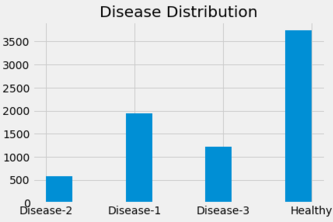
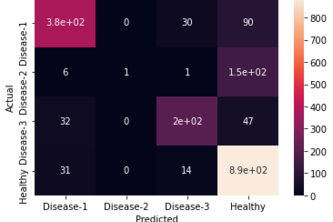
Classifying patients as healthy or having one of multiple diseases using multi-classification techniques.
A quick and easy way to understand the clinical implications of your gut-microbiome.
Different Approaches to solve Phyla Challenge using MLP and BERT training models
Develop a multi-label classification model to classify different diseases based on the microorganisms in the gut microbiome.
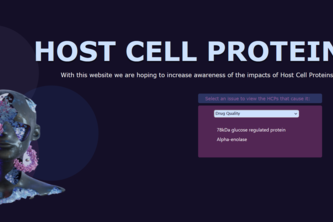
An informational website that tells users the host cell proteins that cause the selected impact.
Use machine learning to predict the health of individuals based on their gut microbiome bacteria sample.
A multi-label classification model to classify different diseases based on themicroorganisms in the gut microbiome - with minimal code, minimal complexity, minimal performance cost.
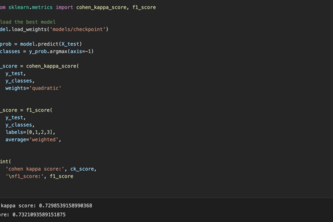
A high-accuracy multi-class gut disease classifier with extra trees model and feature selection. f1 score: 0.7947860962566845 kappa score: 0.6616239944064723 (see the colab link for results)
An Innovating Approach to Phyla Challenge Two using Neural Networks and SMOTE Techniques
MULTI-DISEASE CLASSIFICATION using python
Creating an algorithm to identify ASO targets for TFs, which can aid drug design for RNA-based therapeutics. This aligns well with the advent of personalised therapy in the biopharmaceutical industry.
1 – 21 of 21